The France Promotion Event

Date: 18.04

Location: Paris

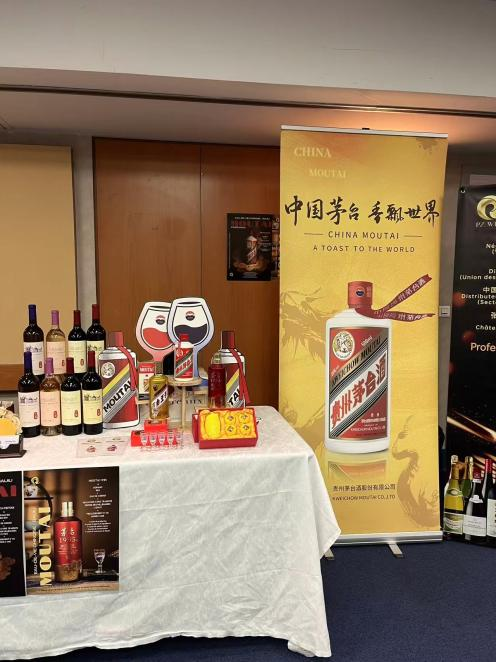
The France Promotion Event for the 2025 China–France Economic and Trade Cooperation

Forum and the 3rd China International Supply Chain Expo (CISCE).

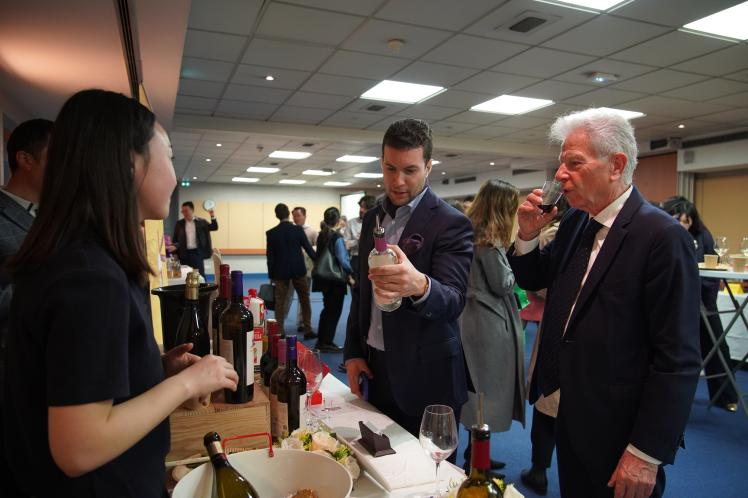
On April 18, the France Promotion Event for the 2025 China–France Economic and Trade

Cooperation Forum and the 3rd China International Supply Chain Expo (CISCE) took place in

Paris. More than 100 French business representatives and a delegation from the China Council

for the Promotion of International Trade (CCPIT) participated to strengthen economic

cooperation and develop new supply chain partnerships. The event also served to announce

the upcoming 3rd CISCE, which will be held in Beijing in July 2025.
Master Class at IMC Krems University

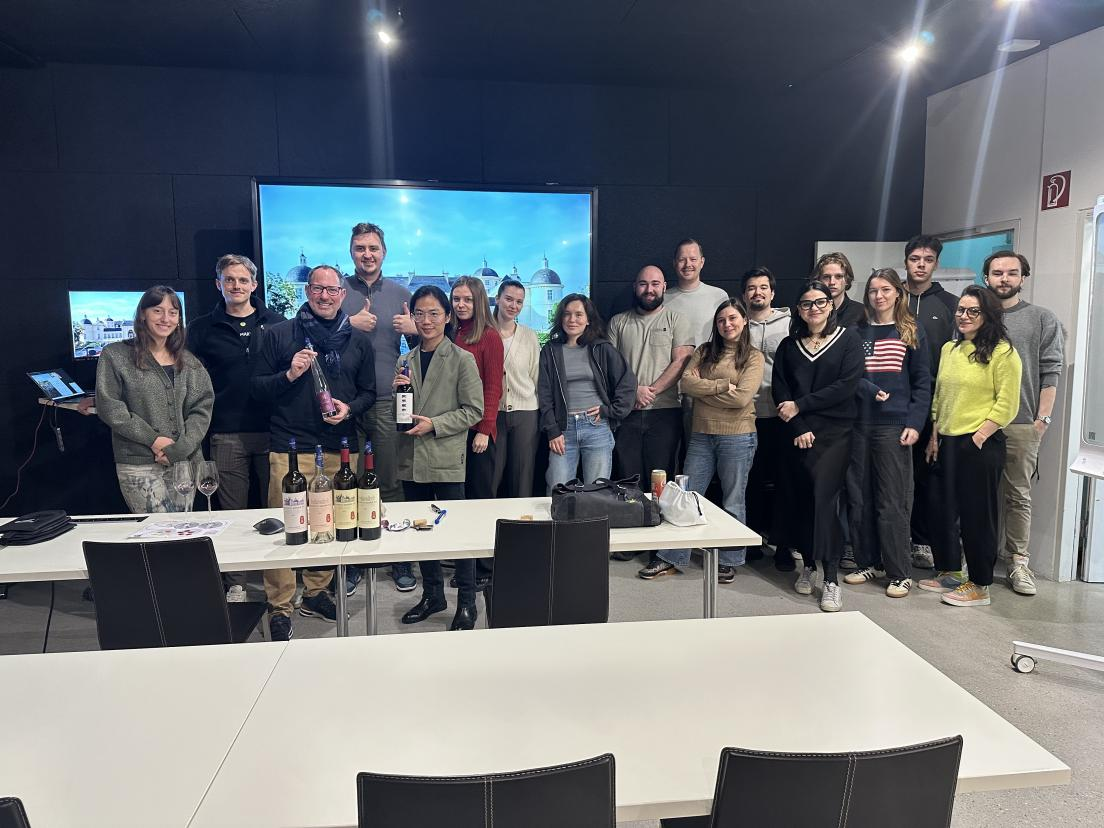
Date: 01.04 Master Class at IMC Krems University – lecture by Yu Song

IMC Krems University of Applied Sciences is located in Krems an der Donau, Austria, and is

known for its strong international orientation. The university offers a wide range of bachelor's

and master's programs in fields such as business, digitalization, health sciences, and

engineering. With partnerships in over 100 countries, IMC Krems emphasizes practical

experience, innovation, and global networking opportunities for its students.
Holger Bodendorf at Landhaus Stricker, Sylt

Loaction:

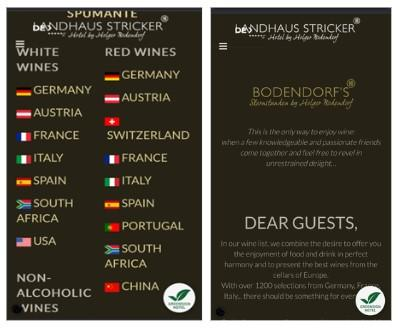
Landhaus Stricker is a luxurious 5-star boutique hotel located on the island of Sylt, in northern

Germany. Nestled in the picturesque town of Tinnum, it offers a refined blend of traditional

Frisian charm and modern elegance. The property features gourmet dining, a wellness spa, and

easy access to Sylt’s sandy beaches and scenic landscapes.

Holger Bodendorf:

is a renowned German Michelin-starred chef and host of the Relais & Châteaux Landhaus

Stricker in Tinnum on the island of Sylt. He has been managing the hotel and its gourmet

restaurant, Bodendorf’s, since 2001. The restaurant has continuously held a Michelin star since

2002.
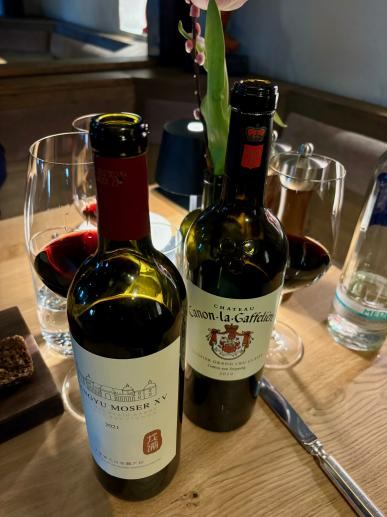
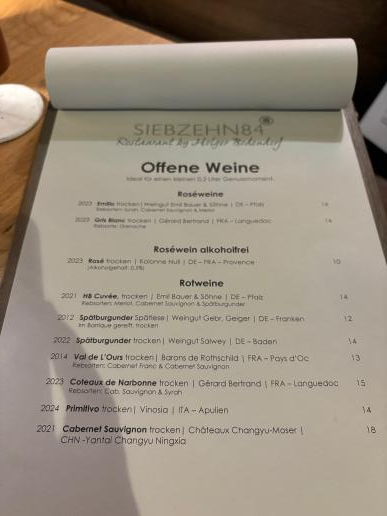
Drops from the Middle Kingdom:

Why Chinese white wine is actually a red one.

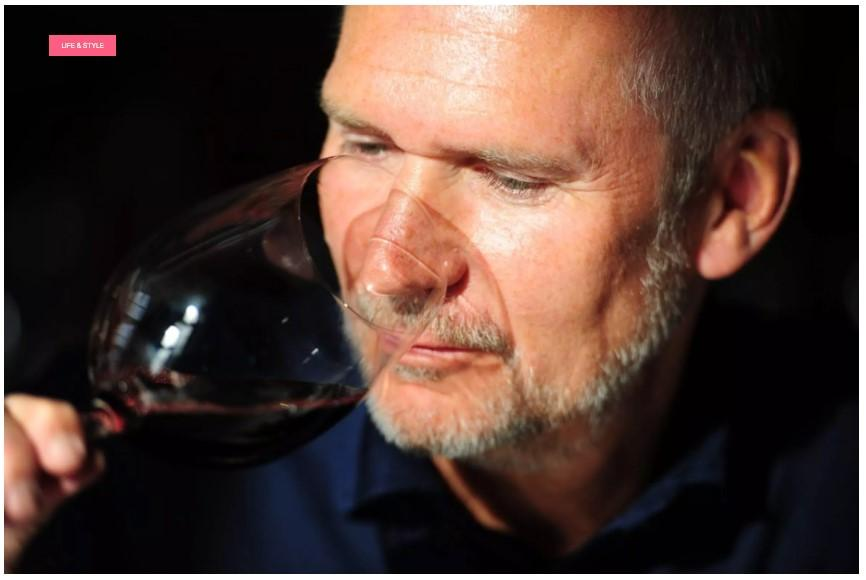
Chinesischer Wein: Warum Weißwein aus China eigentlich ein roter ist | Leben & Wissen | BILD.de

About Bild.de:

BILD.de is Germany’s leading multimedia news platform, combining digital, print, and TV (via

BILD LIVE) to reach a wide audience. It launched in 1996 as BILD ONLINE and became BILD.T

Online in 2002 through a joint venture with Deutsche Telekom. In 2008, the platform was taken

over by BILD GmbH & Co. KG, and the editorial offices moved from Hamburg to Berlin. Today,

BILD.de is the number one news and entertainment portal in Germany, offering up-to-date

coverage on news, politics, business, sports, celebrities, and more.

The article explores the evolution of Chinese wine, highlighting its shift from mediocre

beginnings to internationally respected quality. Austrian winemaker Lenz Moser, a key figure

in this transformation, has worked for over 20 years with Changyu Moser XV to develop clean,

authentic wines in China—some even aiming for organic production.

A unique feature is China's so-called "white wine," which is actually a Blanc de Noir made from

red Cabernet Sauvignon grapes but vinified like a white wine. The 2023 Helan Mountain Range

Blanc de Noir offers fruity, minty aromas and pairs well with Asian dishes. Its higher-end sibling,

the Changyu Moser XV Blanc de Noir, is more complex and ideal with dishes like salmon sashimi

or asparagus risotto.

Interestingly, China’s real wine enthusiasts are not wealthy businessmen, but ambitious young

women—who, as studies show, possess a more nuanced sense of taste. Despite China’s low

average wine consumption (0.6 liters per person annually), this demographic is shaping a new

wine culture focused on quality over status.

De Volkskrant

About De Volkskrant:

De Volkskrant is one of the Netherlands’ most prominent daily newspapers, known for its

progressive voice and in-depth journalism. Originally founded in 1919 as a Catholic

publication, it has since evolved into a leading national newspaper with a broad, modern

readership. Today, De Volkskrant operates across print and digital platforms, offering

comprehensive coverage on politics, culture, society, science, and global affairs. The paper is

published by DPG Media and maintains a strong online presence through Volkskrant.nl,

delivering trusted news and commentary to audiences in the Netherlands and beyond.

Chinese Top Wine: Château Changyu and Lenz Moser

The article tells the story of Austrian enologist Lenz Moser, who joined the Chinese winery

Château Changyu two decades ago. Initially, only Cabernet Sauvignon was planted on the

estate's 450 hectares, as the Chinese market didn’t value white wine. Moser changed that by

introducing a white wine made from red grapes—a "blanc de noir".

One standout product is the Helan Mountain Range ‘barrique’, aged in oak, with floral, exotic,

and balanced characteristics. All wines from the range are described as elegant, clean, and

concentrated. The Moser XV, another wine without barrique aging, is noted for being fresh and

deep with a hint of oak.

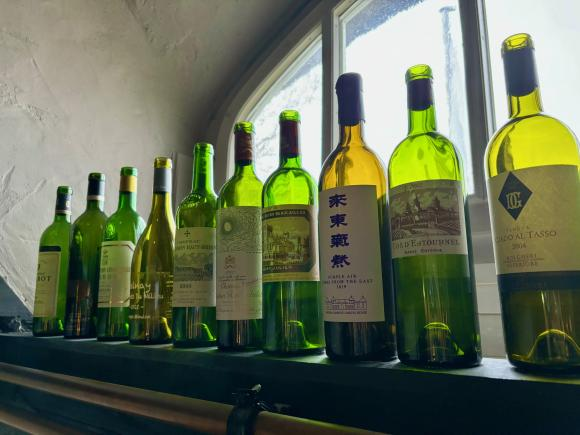
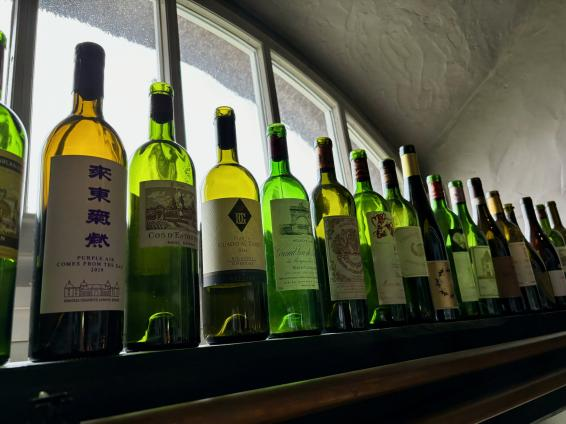
The highlight is the wine called Purple Air, produced from grapes grown at 2300 meters altitude

between Beijing and Shanghai. It is considered highly impressive in both quality and price

(€195), comparable to top wines from Saint-Estèphe in France.

Though Chinese wines might still be seen as a curiosity, these examples—especially Moser's

contributions—prove they can be of exceptional quality.

Cash Interview


Date: April 2025

About Cash

Cash is a prominent Swiss business publication that provides insightful coverage on finance, the

economy, investments, and the stock market. It targets decision-makers, professionals, and

private investors who are interested in current trends and analyses in the financial world.

Known for its in-depth articles, interviews with key industry players, and expert commentary,

Cash helps readers stay informed about developments in Swiss and international markets.

About Gabi Hinterkörner-Zauner:

She is a journalist and interviewer who regularly contributes to the business magazine CASH.

She conducts interviews with key figures from the wine, retail, and consumer goods industries,

highlighting economic trends and innovations. Her interview style combines in-depth expertise

with a strong sense for personal stories and entrepreneurial developments.

Cash Interview translated

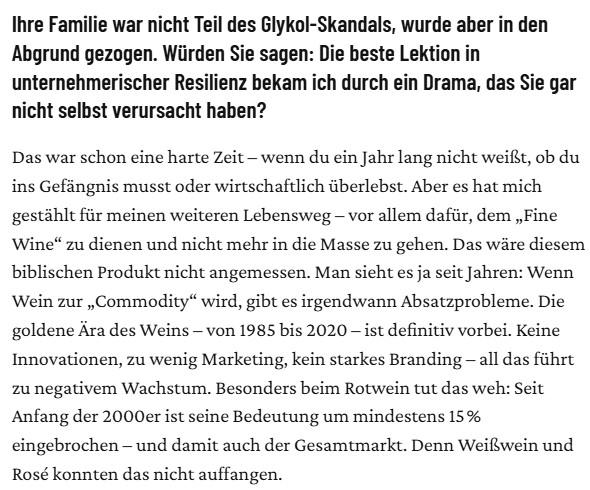
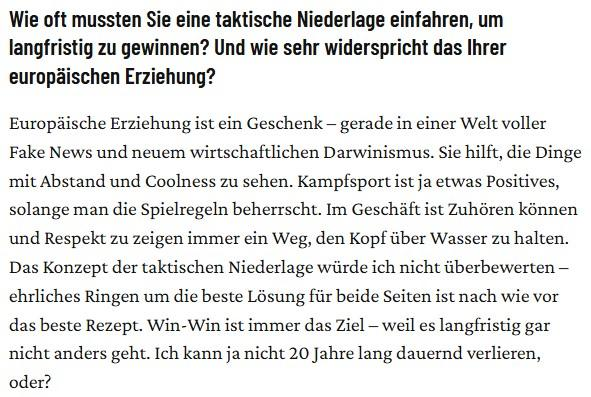
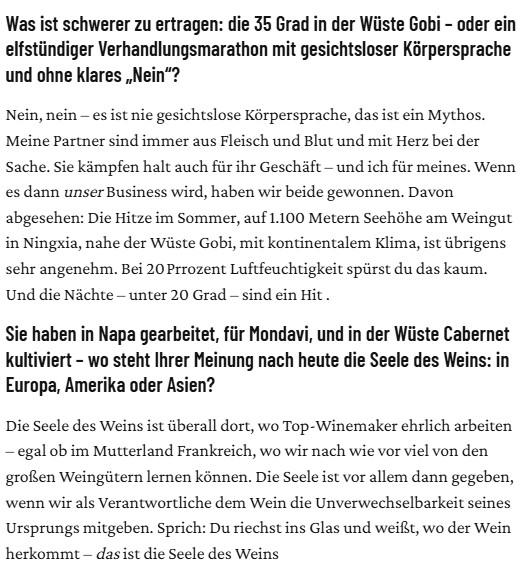
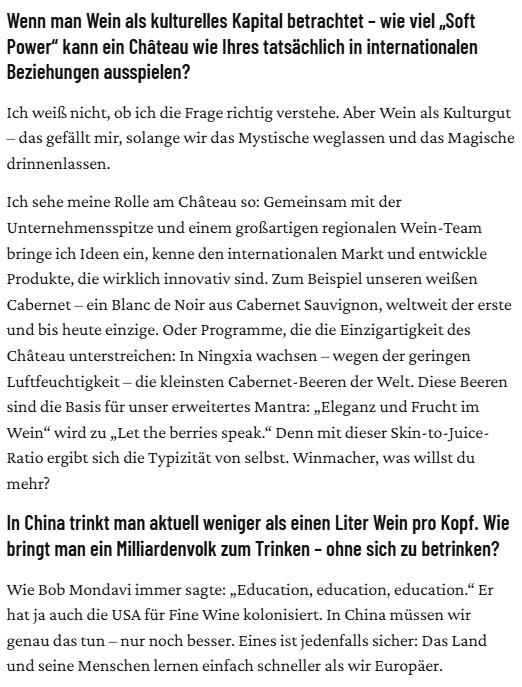
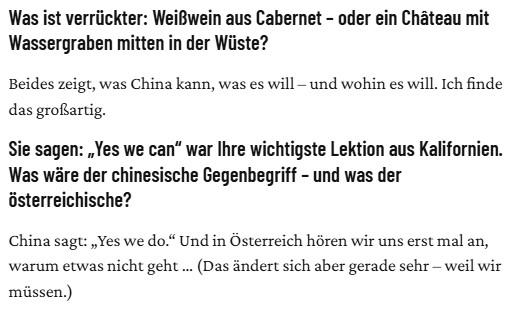
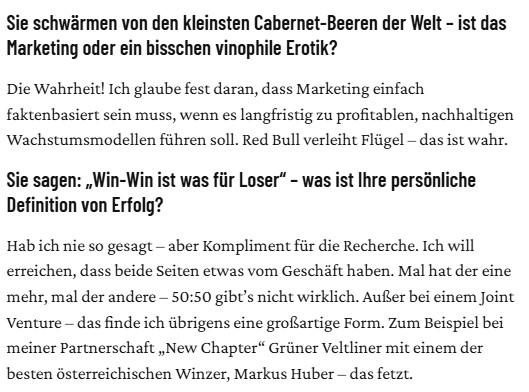
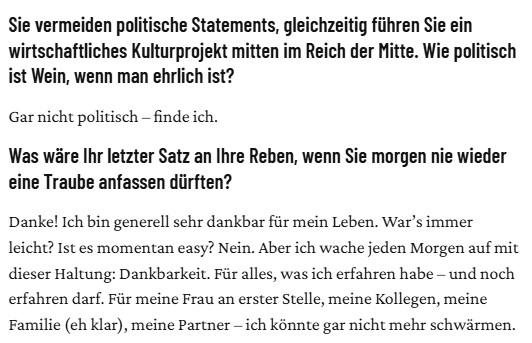
CASH: Mr. Moser, your name speaks for itself. You make your own wine, walk your own path.

Is it risky?

Lenz Maria Moser: I had a unique opportunity in 1997 to go to California and sell wine for

Robert Mondavi. And when you’ve been bitten by the California bug, you need to keep moving.

That’s why I eventually ended up in China. It was a great chance. Not only am I a winemaker by

birth, but also a marketing person. We set up a European wine portfolio at China’s Changyu

winery. Today, this wine is sold under the Château Changyu Moser XV label in Europe – 250

hectares, 500,000 bottles sold in China and worldwide. Premium wines range between 15 and

120 euros per bottle. We’ve also entered Austria’s trade and launched an online shop. Now we

are introducing a white Cabernet Sauvignon and a Blanc de Noir – some very rare varieties.

What makes Château Changyu Moser XV wines stand out?

We are the only winery in the world to produce white wine from Cabernet Sauvignon grapes.

That’s a topic that draws attention. We sell these wines directly in China and with great success.

The personal relationship with the Chinese helps a lot. However, you have to know that things

move slowly – we Europeans want everything fast. But once the Chinese make a decision, it

holds.

Is the Chinese wine boom still going strong?

In 2013, there was a boom, but the market has since collapsed due to political and economic

issues – especially the rise of national spirits like Baijiu. Let me share a number: the wine

industry’s value in China is 80 billion euros, while Baijiu reaches hundreds of billions. Marketing

budgets for wine are naturally much lower than in the giant spirits industry. But we’re already

seeing signs of recovery.

How important is tourism for wine sales?

The château saw a $70 million investment – international tourists are now welcome in Ningxia.

The state is promoting wine travel. China is now welcoming tourists again and that brings great

opportunities. Asia is moving closer – the damage done by the U.S. is irreparable.

What are your main export markets?

We are present in 35 countries, especially France and Germany, but also growing in Austria.

80% of our wine is sold in China, 20% abroad. After COVID, exports are gaining momentum.

Our base is solid, and while we’re still new in the niche, we’re here to stay.

You recently opened a shop in Parndorf. What’s the concept?

We launched an outlet where all our brands are represented. I’m there in person, tasting with

customers. Every wine tells a story – we try to sell wines by story and emotion. We want to

raise interest in Chinese wines, especially the special ones. These are real attractions for our

customers.

Spirits and cocktails – are they your competition?

Absolutely. The competition is fierce – innovations are booming in California and other places.

Traditional winemaking countries like France, Italy, and Austria are lagging behind in

innovation. Wine used to top category rankings; that ended in 2015. Now, we are losing the

young generation to cocktails, beer, and lighter drinks.

What about Chinese wine consumers?

Surprisingly, their taste is quite similar to Austrians’. They prefer dry wines with moderate

alcohol. But young Chinese are curious and open to trying new things. They are discovering

wine. Chinese students abroad return home and want these premium wines.

How did the wine industry reinvent itself?

There’s a consumer shift – fitness, health, and the desire for lighter drinks. But traditional wine

is often too strong and too complicated. The spirits industry is more creative – think cocktails,

long drinks, and fun innovations. That’s what young people want, and we have to adapt. We

need premium wine for this audience.

What about alcohol-free wine?

Orange, natural, and alcohol-free wines are trending, especially among health-conscious and

younger consumers. But the only thing giving wine flavor is alcohol or sugar – removing both

makes things tricky.

But young people are drinking less?

Yes, they optimize their health, and alcohol doesn’t fit into that lifestyle. But this is a phase –

youth always experiments.

So is wine still relevant for younger, health-conscious people?

Yes, but it needs to be lighter and more fun. Young people today are mindful and often say no

to alcohol – unless it’s at a party. But the magic of wine has lasted 3,000 years and won’t

disappear so quickly.

Thank you for the interview!

ATTACHMENTS:

Presseaussendung M12 German

Press release M12 English