
WINEHUB Budapest-Changyu Benchmark Tasting
Location: WineHub – 1036 Budapest, Pacsirtamező u. 41.
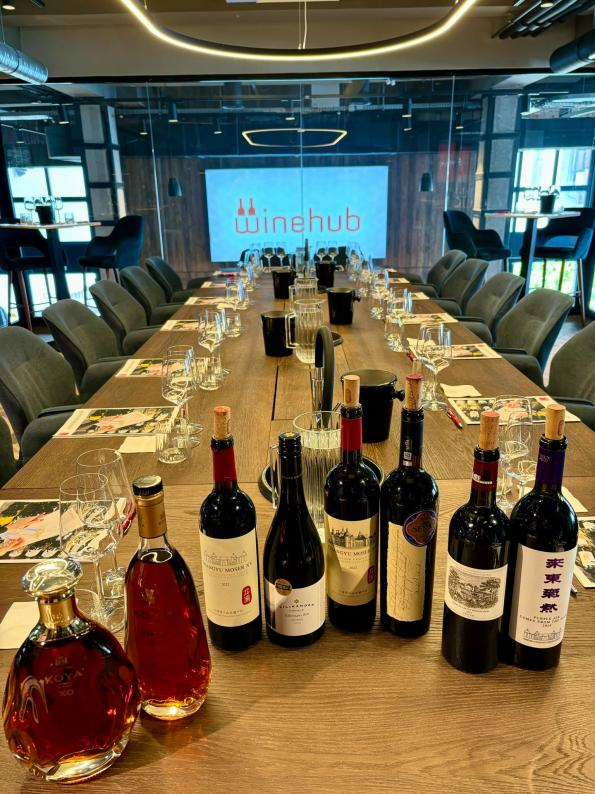
Tasting room upstairs (glass-walled space)
Date: May 12th, 3:00 PM
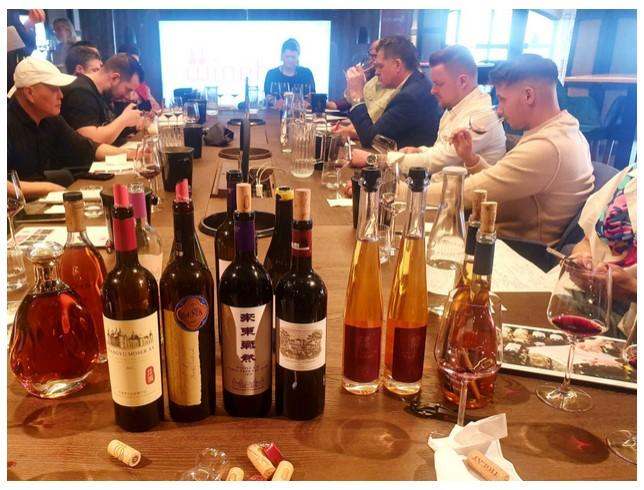
Number of guests: approx. 20 people (journalists, WineHub premium clients – top
sommeliers, and key representatives of the Chinese community).
Program:
Lenz was leading the benchmark tasting. Afterwards, guests were treated to a premium
charcuterie platter at the wine shop’s affiliated restaurant – Cut and Barrel.
Lineup:
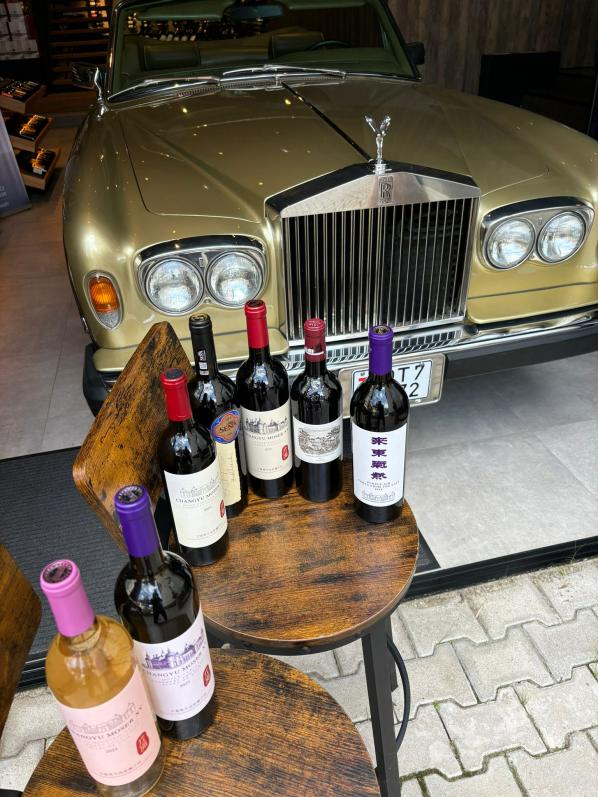
- Chateau Changyu Moser XV Helan Mountain Cabernet Sauvignon Blanc de Noir
2023 Gran Vinasol Chardonnay Sobre Lias 2022
- Chateau Changyu Moser XV Moser Family Cabernet Sauvignon Blanc de Noir
2023 Velich Tiglat 2021
- Chateau Changyu Moser XV Helan Mountain Cabernet Sauvignon 2023
KILIKANOON Killerman’s Run Shiraz
- Chateau Changyu Moser XV Moser Family Cabernet Sauvignon 2022 Sena
Aconcagua Valley Red Rouge 2021
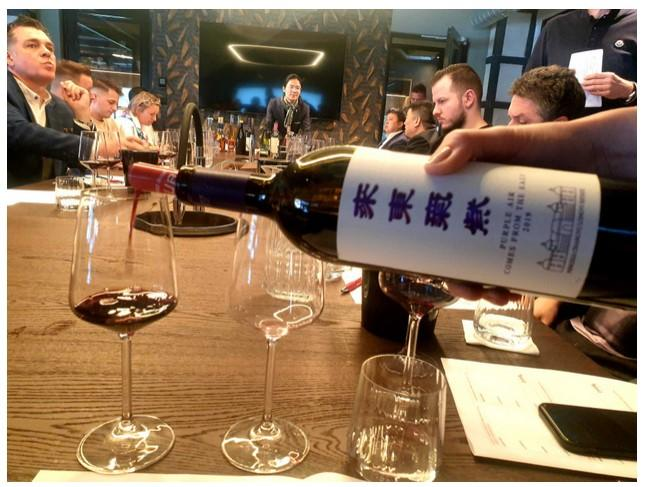
- Chateau Changyu Moser XV Purple Air Comes from the East 2019 Chateau
Lafite Rothschild Pauillac 2021
- Changyu Golden Valley Ice Wine 2019 MAD MOSER: MMM555 Tokaji Aszú 6
Puttonyos 2013
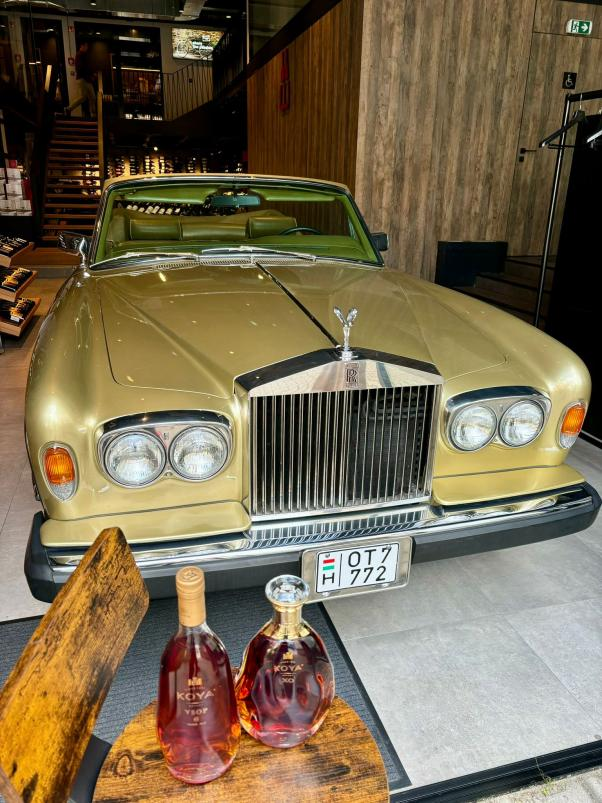
- Changyu Koya XO, Changyu Koya VSOP
Attending Media
- Ágnes Vágó (Turizmus Online):
Highly engaged. Published an article titled:
“Meglepő és tanulságos – kínai borok kóstolója Budapesten”
She covers several outlets under a group with a reach of ~2.2 million people.
Potential for future hotel rep tasting.
- Ivett Vancsik (VinCE Magazine):
Editor-in-chief, attended in professional capacity.
Key Chinese Community Attendees
- Zhang Yongwei
President – Hungarian Federation of Chinese Social Organizations
- Ye Xiaorong
President – Hungarian Lishui-Qingtian Fellowship Association
- Ye Xiaoping
Executive VP – Hungarian Lishui-Qingtian Fellowship Association
- Zhang Weiling
General Manager – DunaPanda Supermarket
- Chen Jie
Europe Regional General Manager – StarRiver Cruises

``Surprising and Educational – Chinese Wine Tasting in Budapest‘‘
About Turizmus:
Turizmus Online is a Hungarian digital magazine dedicated to tourism, hospitality, and
gastronomy. It covers industry news, event reports, market trends, and features in-depth
articles about travel destinations, hotels, and culinary experiences. The platform serves both
professionals in the tourism sector and curious readers interested in developments within
Hungary and abroad.
China aspires to become a major power in winemaking – and once the East Asian country sets
its sights on something, it’s only a matter of time before it happens. To achieve this goal, in
recent decades, the country’s viticulture and winemaking industries have undergone
significant transformation. As a result, China is now considered one of the most dynamically
developing wine-producing countries in the world.
Why Sichuan?
Before diving into the wines, the tasting’s host, Lenz Moser, clarified some basics about
Chinese wine. He explained that most of the showcased wines came from Sichuan Province.
Traditionally known for producing Baijiu (a Chinese rice spirit), Sichuan has recently drawn
attention for its potential in winemaking. The province’s high-altitude regions, especially the
upper valleys of the Lancang, Nu, Jinsha, Dadu, and Min rivers (ranging from 1600 to 2800
meters), offer excellent grape-growing conditions – with abundant sunshine, sloped hillsides,
and ideal rainfall – helping grapes mature and develop complex flavors.
When Did Quality Winemaking Begin in China?
Surprisingly, the story of modern Chinese winemaking dates back to 1892, with the founding
of the Changyu winery by Zhang Bishi in Yantai, Shandong Province. From the 1990s –
particularly after China joined the WTO in 2001 – wine imports increased, and growing
consumer awareness encouraged the development of domestic wineries.
Preferred Grape Varieties and Wines in China
Red wines dominate Chinese wine culture, making up 79% of the grapes grown. The most
popular varieties include Cabernet Sauvignon, Merlot, Cabernet Franc, Pinot Noir, and the
native Vitis Amurensis. Whites, such as Chardonnay, Riesling, and Muscat, make up 20%.
Does China Really Produce Ice Wine?
Yes – and of impressive quality! In the northeastern region, especially in Liaoning Province,
the conditions are ideal for ice wine. The Changyu winery, in cooperation with the Canadian
Aolos Group, has established one of the world’s largest ice wine estates in Benxi. Grapes are
left to freeze on the vine, then pressed to extract a sweet, concentrated must – which
attendees had the chance to taste.
Chinese Brandy Production? Believe It!
Indeed, Chinese brandy rivals traditional French cognac in quality. Changyu’s brandy segment
is gaining ground in the domestic market, thanks partly to the absence of import duties on
French cognac, which has fueled local production and consumption.

Wine Prices and Export Market Presence
One of the most encouraging takeaways was the value-for-money proposition of Chinese
wines. With internationally competitive taste profiles and traditional production methods,
they’re increasingly appearing on global markets. In 2024 alone, China’s main export markets
included Hong Kong, France, South Korea, Macau, and Australia, and demand continues to
grow.
Who Led the Tasting in Budapest and Why?
The tasting was led by Lenz Maria Moser, a 15th-generation member of an Austrian
winemaking dynasty and a key figure in developing China’s Château Changyu Moser XV
winery. Since 2005, he has worked with Changyu as a consultant and became head
winemaker in 2015. He spends months each year in China during the harvest season, directly
overseeing viticulture and winemaking. He focuses on Cabernet Sauvignon, creating wines
like Cabernet Sauvignon Blanc de Noir and the premium "Purple Air Comes From the East".
What Wines Were Tasted?
- A reductively made Cabernet Sauvignon white wine from 2023, paired with a 2022
Chardonnay.
- A Cabernet Sauvignon aged for a year in barrels.
- A 2022 Cabernet Sauvignon paired with a 2015 Cabernet-based red blend.
- A rare Chilean-Chinese blend.
- A special "Purple Air Comes From the East" aged for 8 years.
- Two high-quality ice wines (from 2013 and 2019).
Final Thoughts
Experts concluded that Chinese winemaking is evolving rapidly, blending traditional and
modern techniques. Thanks to international collaborations, Chinese wines are gaining
increasing global recognition and are consistently earning prestigious awards on the world
stage.